Geotechnical Investigations · Principal-Led · Sydney
Geotechnical Investigations. Engineered Properly.
Boreholes, penetrometers and NATA-backed laboratory data, turned into reports your certifier, council and structural engineer can act on, for DAs, complying development, footings, basements and retaining structures across Sydney. The engineer who drills your ground is the engineer who signs your report.
Boreholes to AS 1726, quoted per site · Fixed fee in writing within one business day · Reports typically five to seven business days from fieldwork
01 · Scope
What The Investigation Covers.
DA & CDC Reports
Geotechnical reports written to answer the questions your council, certifier or structural engineer will actually ask, prepared with the approval pathway in mind from the first borehole.
Footing & Slab Design Input
Investigation depths, bearing parameters and founding recommendations your structural engineer can design from directly, without a second round of questions.
Basements, Excavations & Retaining
Subsurface profiles, groundwater observations and lateral parameters for basements, cut batters and retaining structures on Sydney’s stepped and sloping blocks.
Drilling, DCP & Lab Testing
Borehole drilling with our 4WD-mounted rig and motorised hand augers for tight access, dynamic cone penetrometer testing, and NATA-accredited laboratory testing where the design calls for it.
02 · Fieldwork
Done By The Engineer.
No subcontracted drill crews, no drive-by inspections. The Principal Engineer operates the rig, logs the profile as it comes out of the ground, and cross-checks it with in-situ testing on the spot, so by the time the report is written, the ground has already been read twice.
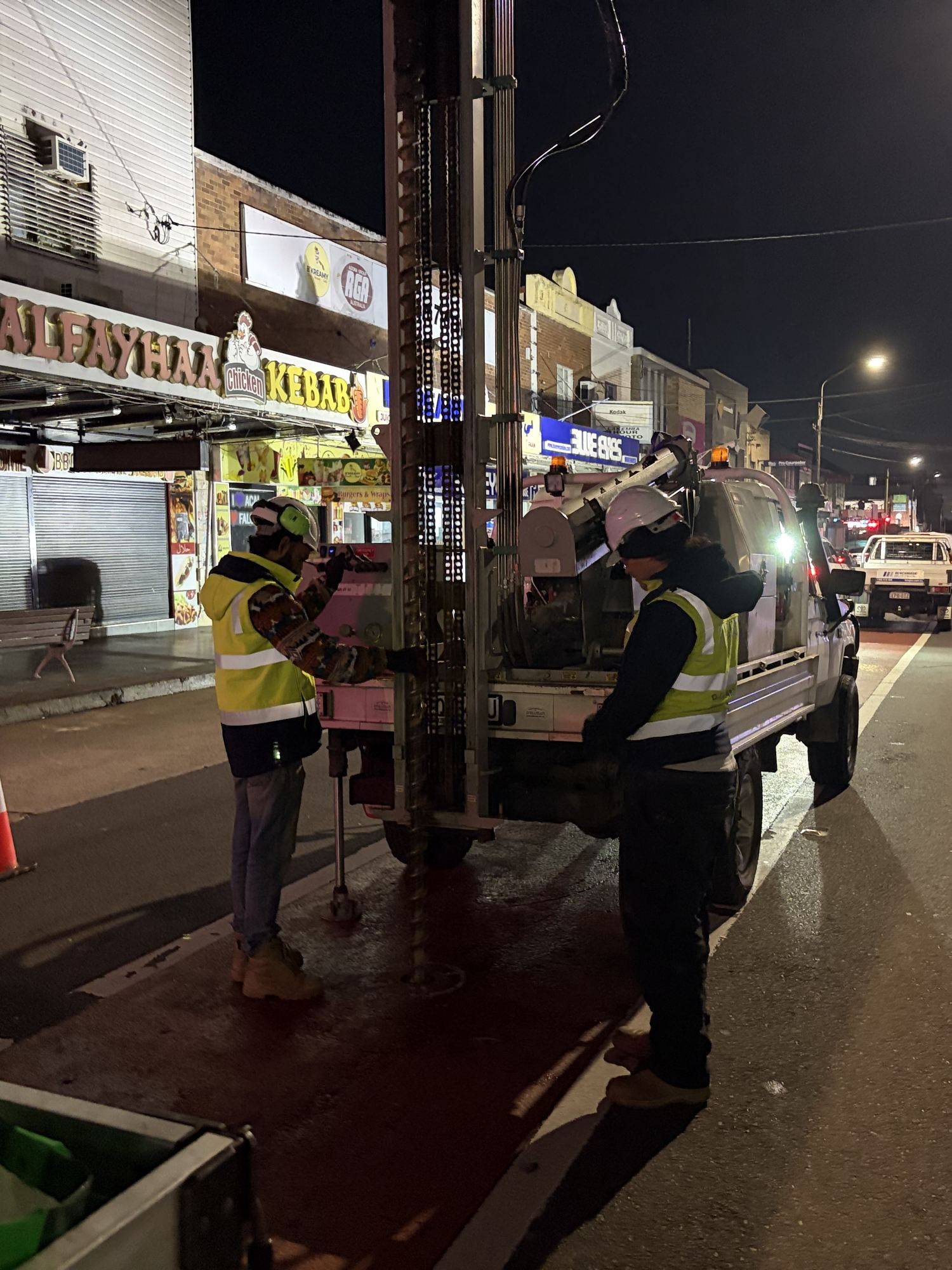
Fieldwork
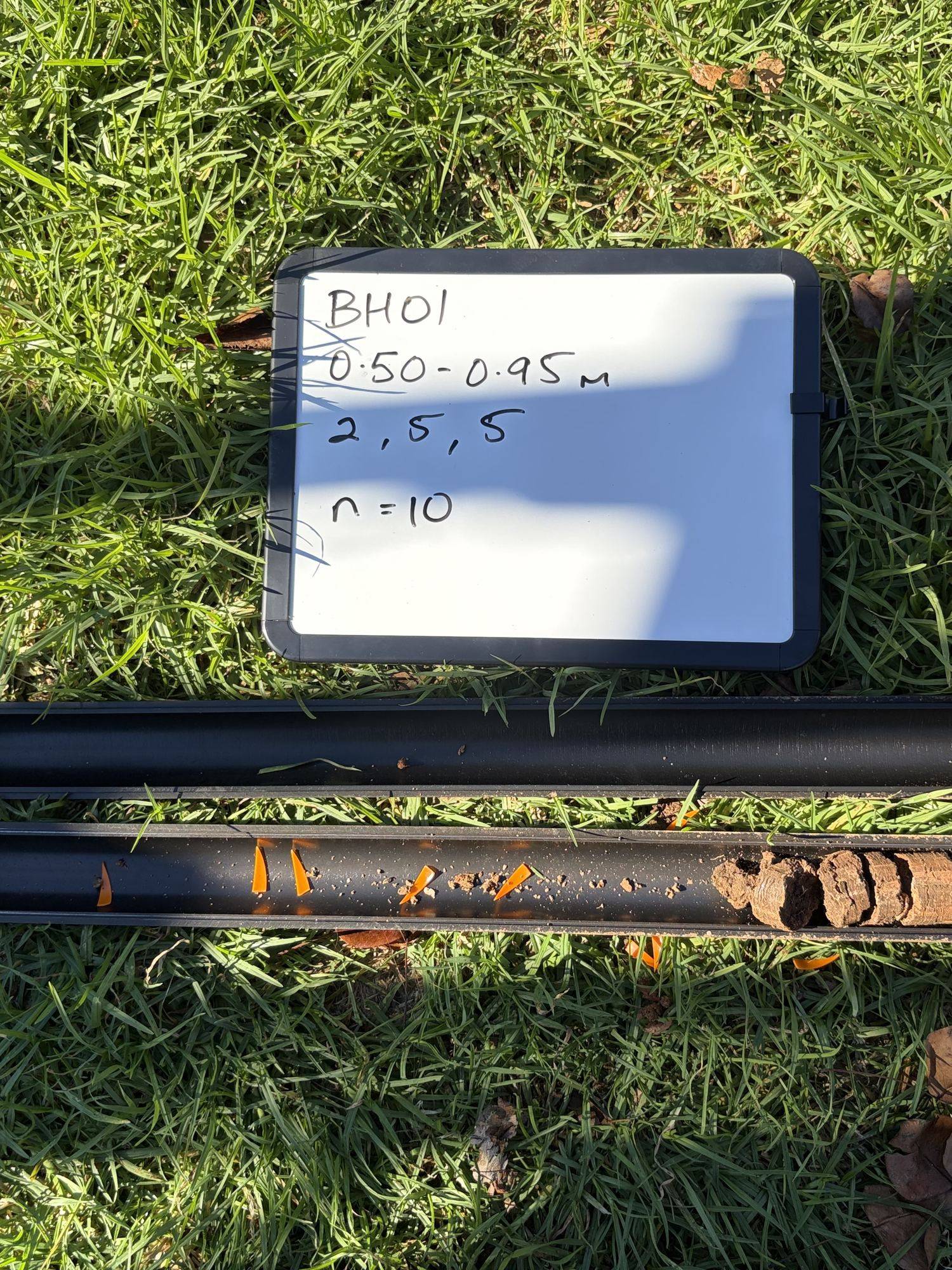
Logged On Site
03 · Sydney Ground
The Ground Changes By Suburb.
Sydney sits on a handful of very different geologies, and the investigation is scoped to the one under your block, not a city-wide average. Two doors down from a stable site, your land can behave completely differently.
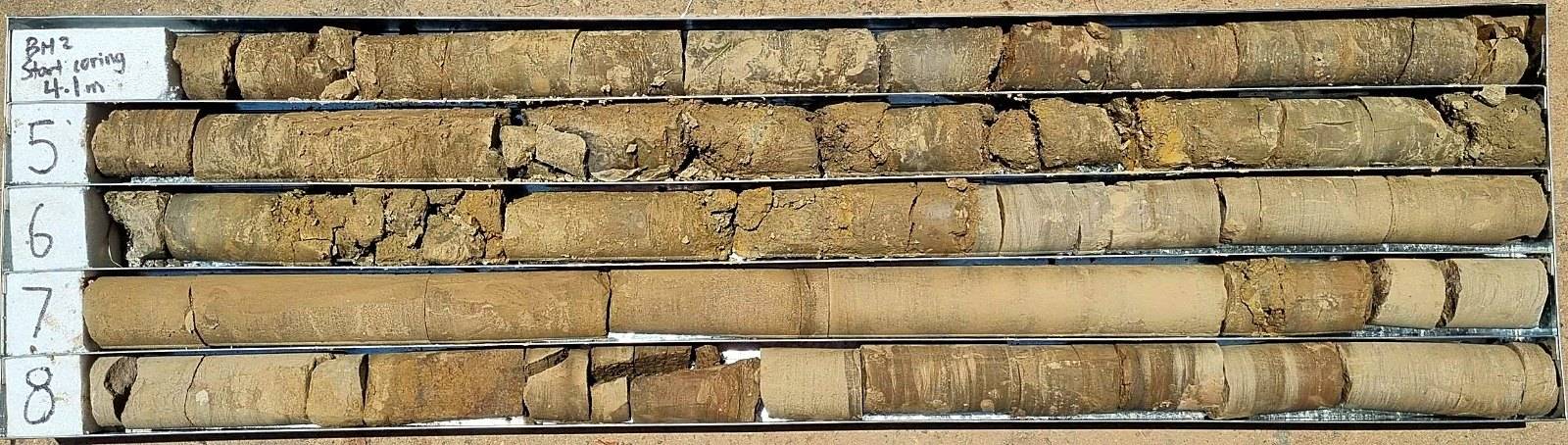
Rock Core · BH2 From 4.1 m
Inner West
Ashfield Shale country: residual clays over weathered shale, often moderately to highly reactive. Investigations here focus on clay depth and shale weathering, because the difference decides the footing system. Class M and H1 outcomes are common.
North Shore
Hawkesbury Sandstone, with outcomes hinging on how much weathered soil sits above the rock. Shallow rock founds beautifully. Bored piers to sandstone carry most of the harbour’s basements. Deeper profiles behave like clay and need proper investigation.
Western Sydney
Bringelly Shale, the most reactive common profile in metropolitan Sydney. Across the Cumberland Plain, H1 and H2 outcomes are frequent, and movement estimates need boreholes deep enough to see the whole active zone.
South West Corridor
Legacy fill, alluvial soils and reactive clays push a higher proportion of sites into Class P, common across Liverpool and Campbelltown. The investigation’s first job is finding where the fill stops and natural ground begins.
Eastern Suburbs & Coast
Dune sands over sandstone, steep marine slopes and tight streets. Sand profiles found well but cave in open excavations; the rock surface dips sharply block to block. Investigations here earn their keep on access and depth-to-rock.
Not sure which one you’re on? Send the address. The desktop geology is checked before we even quote.
Check My Block04 · Why Early
Ground Found Late Costs The Most.
Unexpected rock, fill, or reactive clay discovered after contracts are signed becomes a variation, priced by whoever holds the leverage at that moment. An investigation done properly, and done early, converts those unknowns into design parameters while every option is still open and competitively priced.
Turnaround is scoped at first contact, and urgent DA, CC and settlement timelines can be accommodated. Call the Principal directly to arrange priority scheduling. And where standard rigs stop at the kerb, our 4WD rig and motorised hand augers keep going. See tight-access drilling.
Investigations are quoted fixed-fee against the number and depth of boreholes, access and the laboratory program. Most fall under our Complex Projects tier (basements, multi-storey, retaining walls, sloping or restricted-access blocks), and the fee is confirmed in writing within one business day. What moves the figure is set out in the geotechnical report cost guide.
Common Questions
An AS 1726 geotechnical investigation provides the ground data for Sydney DAs, CDCs, footings, basements and retaining structures. Boreholes, penetrometers and NATA-accredited laboratory data become a report your certifier, council and structural engineer can act on. Fees are fixed and quoted per site. Reports with laboratory testing typically take five to seven business days from fieldwork, confirmed in the written quote. The engineer who drills your ground signs your report.
Start With The Ground.
Every SFGEO engagement begins with the Principal Engineer reading your block and your plans, and standing on your ground on the day. Detailed answers to common questions are on the full FAQ.